About

Greg Hamilton is a professional music copyist, engraver, and music librarian specializing in clear, accurate, performance-ready scores and parts for composers, publishers, orchestras, recording sessions, and film and television.

In addition to his expertise in music preparation, Greg has served as Principal Librarian for the Jacksonville Symphony, the Winnipeg Symphony Orchestra, and the Oregon Bach Festival, and has also worked as a freelance librarian with the Toronto Symphony Orchestra.

Greg is a member of the Vancouver Musicians’ Association, Local 145.

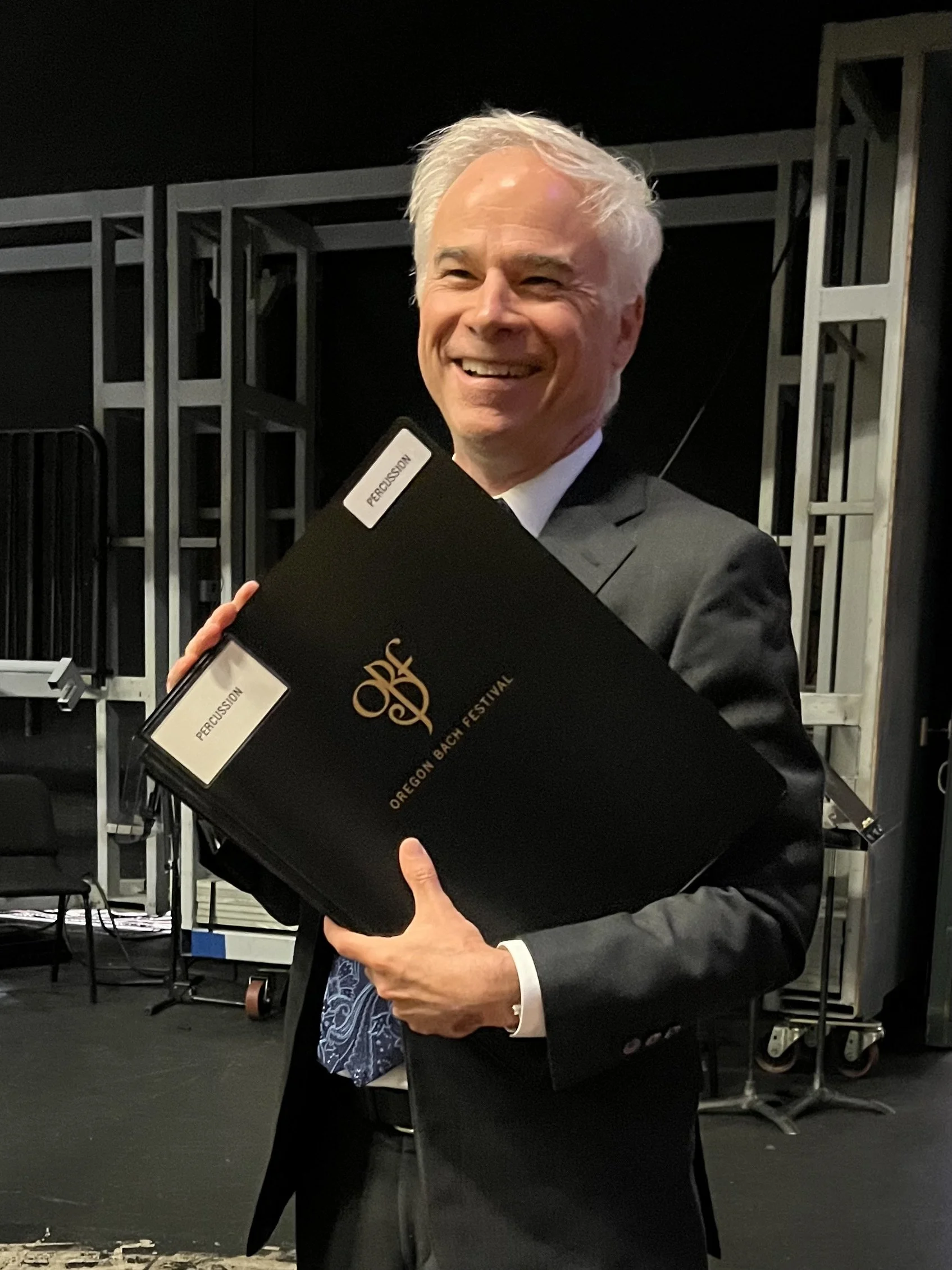
A smiling man in a tuxedo holding a black certificate folder labeled 'Oregon Bach Festival' with a lucky charm attached, in an indoor setting with black walls and metal scaffolding in the background.

Music Preparation, Refined

Exceptional music preparation is more than putting notes on a page. It’s about creating clear, intuitive, performance-ready music that musicians can trust from the very first rehearsal.

An experienced music copyist understands that every musical style has its own visual language, conventions, and performance practices. The result should feel instantly familiar to the performer—a clear musical roadmap that communicates the composer's intentions with precision, clarity, and confidence.

But great music preparation goes beyond engraving. A professional copyist also brings an editorial eye to every project, catching omissions, inconsistencies, ambiguities, and potential errors before they reach the rehearsal room. Subtle details—page turns, cues, dynamics, articulations, spacing, and notation—can make the difference between music that merely looks correct and music that works beautifully in performance.

The goal is simple: remove obstacles between the music and the musician. When parts are accurate, elegant, and intuitive, performers can spend less time deciphering the page and more time bringing the composer's music to life.

We combine the craftsmanship and discipline of traditional hand-copied music with today's leading notation technology, including Finale, Sibelius, and Dorico. The result is modern, efficient workflow without sacrificing the care, judgment, and artistry that exceptional music preparation demands.


In His Own Words

Published in the Summer 2026 issue of Upbeat, the Vancouver Musicians’ Association, Local 145 newsletter.

What drew you to the world of music preparation?

I graduated with a degree in Jazz Studies from Western Washington University, Bellingham in 1988 with the intent on being a freelance bass player, but while at school I showed Chuck Israels, the Director of Jazz Studies one of my jazz transcriptions and he said, “This is good—I have work for you!”

From there I became his copyist for all of his big band arrangements. Looking back, I think what drew me to this work was preparing something graphically artistic and highly precise—much like architectural drafting. I also appreciated producing something visually elegant and lasting that the musicians could be using for years to come.

Despite the fussiness of working with a calligraphy pen—ink stained fingers was just part of the job—and often getting “the claw” from gripping the pen so tightly, I genuinely enjoyed the work. In addition I was often complemented on the neatness of my hand copying, and as a bonus, was well paid as a student.

What advice would you give someone wanting to pursue your profession?

Be sure this is the work you want to do—I say this because it’s highly specialized and not a burgeoning profession! If someone was determined to pursue this profession, my advice would be to study the rules of music notation, look at various scores and parts in different genres, and try to replicate a publishers house style, down to every little nuance in order to learn the craft. This not only includes the layout and fonts, but the thickness and taper of slurs, positioning of dynamics and articulations, plus effective page turns and cues.

Anyone can purchase a music notation program such as Sibelius or Dorico and create sub-standard scores and parts, but to create exceptional work, you have to manipulate the software to produce the correct musical result rather than allowing its default settings to dictate the outcome.

What in your opinion is essential to be successful in this field?

There are many key elements needed to be successful, but I’ll mention just a few. First would be a solid understanding of the principles of music notation and how they work. Success involves far more than just getting the notes on the page, but also appreciating the finer points of a well-engraved score or part, and understanding historical context that informs notational practices.

Equally important is a solid foundation in orchestration, including instrument ranges, transposition and the stylistic requirements within different musical genres. Preparing parts for classical publication has a different set of requirements and historical awareness than copying parts for a scoring session.

Having a keen eye for detail—what we in the industry call “having an engravers eye”—along with the patience and discipline to push through when you have a looming deadline. The music copyist is typically the last link in the chain before a rehearsal or recording session and carries a critical responsibility to deliver accurate, performance ready materials on time, every time!

Lastly, having highly proficient computer skills including expertise with professional-level music notation software. While the occasional composer or orchestrator may still deliver a manuscript score, the parts are almost always prepared and generated using programs such as Sibelius, Dorico or Finale.

What work are you most proud of in your career so far?

I’ve worked on many wonderful projects throughout my career. The first one that comes to mind is working with the Toronto Symphony as the “in-house” music copyist for the majority of the 40 short anthems commissioned for the “Sesquie for Canada’s 150th Anniversary” written by composers from across the country. Each anthem was premiered by a different Canadian Orchestra, as well as performed by the TSO—certainly a project to be proud of as a Canadian.

A few years ago I was hired by the Leonard Bernstein Office to prepare a new corrected edition of On the Town for the New York revival on Broadway. This involved preparing a new score and set of parts for both the theatrical and concert versions. I was pleased to know some of New York’s finest players were reading from my orchestral parts night after night.

It was a privilege to be the Supervising Copyist for the recording of the national anthems for the Vancouver 2010 Winter Olympics. I coordinated a small team of copyists, two proofreaders and a librarian who handled the printing and binding of the music. I also worked as one of the copyists for the opening and closing ceremonies, as well as the session librarian. It was thrilling to be part of both of these projects, as I always find it deeply rewarding to work with a team of talented colleagues who share a commitment to achieving artistic excellence.

What would you imagine yourself doing if you were not in the music preparation field?

Architect, sommelier or fashion designer—it may sound rather odd, but each of these professions appeals to the same part of my personality. I’ve always been visually oriented and have a deep appreciation for beauty, craftsmanship, and thoughtful design.

On a recent trip to Paris, I was reminded of the French philosophy that even the simplest, most functional objects should be beautiful. That idea has stayed with me, and I realize it's one of the reasons I love music preparation. To me, music notation is no different. While its primary purpose is to serve as a clear and accurate roadmap for performers, it can also be elegant and visually beautiful. Creating music that is both functional and aesthetically refined is what I find most rewarding, and it's the same quality that draws me to architecture, wine, and fashion.